

The U17 AFCON 2026 continues to underline how rapidly African youth football is evolving. One of the standout matches of the tournament so far came when Egypt U17 defeated Ivory Coast U17 4–1 in a game that showcased two completely different football cultures and tactical identities.
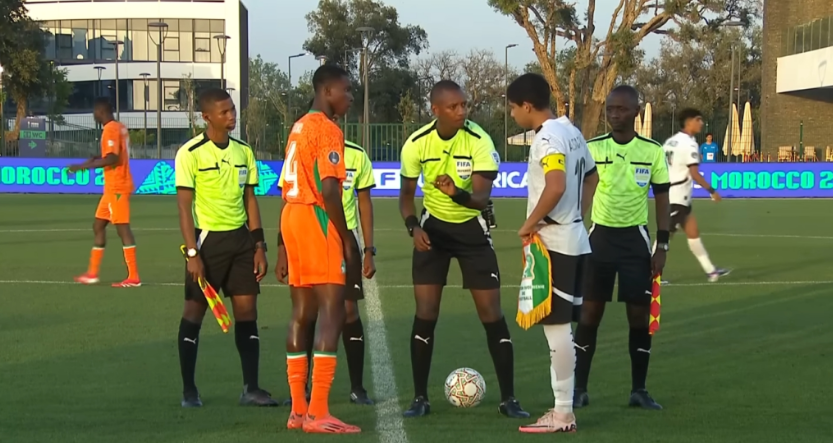
Egypt U17 – Mediterranean Football With Andalusian Rhythm
Egypt impressed greatly throughout the match. Their football carried clear Mediterranean influences:
- quick passing combinations
- fluid movement
- technical confidence
- tolerance for individual decisions and dribbling freedom
At times, the team almost resembled a youth version of a Spanish or Andalusian side — with shades stylistically similar to clubs like Real Betis in the way they combined centrally and attacked through intelligent rotations. The Egyptian side played:
- aggressive combination football
- quick wall-passes around central areas
- high technical confidence under pressure
- creative freedom in offensive transitions
Their ability to win the small duels around the middle circle — especially in 1v1 and 2v2 situations — became decisive for the outcome of the match.
Ivory Coast U17 – Raw Power and Direct Football
Despite the heavy result, Ivory Coast still showed several highly interesting qualities.
Their football was:
- physical
- explosive
- transition-oriented
- vertically aggressive
Stylistically, the team felt closer to:
- German transitional football
- or physically intense Eastern European structures
The Ivorians attacked quickly after recoveries and looked dangerous when the game became open.
However, they lost too many:
- central duels
- second-ball situations
- and small combination battles in midfield
That made it difficult to sustain pressure against Egypt’s technical circulation.
Player Recommendations – Egypt U17
Khaled Mokhtar – Attacking Midfielder / Forward born 2009
The best player on the pitch.
A highly intelligent attacking player who constantly influenced the game between the lines.
Strengths:
- movement
- finishing
- tempo changes
- combination play
- composure under pressure
Mokhtar looked capable of controlling the rhythm of attacking phases while also producing decisive actions individually.
Ahmed Safwat – Central Midfielder born 2009
Team captain. A stable and tactically disciplined midfielder.
While operating in a role that suited him structurally, he still contributed with calmness and good circulation play.
Strengths:
- positioning
- passing rhythm
- tactical understanding
- balance in possession
Ahmed Beshir – Central Midfielder born 2009
One of the technically cleanest players in Egypt’s side.
Strengths:
- first touch
- progressive passing
- technical security
- intelligent movement in transitions
Very elegant profile with strong football understanding.
Mohamed Gamal – Wide Player born 2009
An exciting wide player with fine technical qualities.
Strengths:
- dribbling
- intelligent movement
- curved crosses
- creative decision-making
One of those players who always looked capable of creating danger from wide areas.
Player Recommendations – Ivory Coast U17
Broulaye Cissé – Forward born 2009
A forward with real upside.
Strengths:
- explosiveness
- acceleration
- direct attacking play
- instinctive movement in dangerous areas
Even in defeat, Cissé showed clear high-level physical tools.
Harafat Diabaté – Wide Attacker born 2009
A hard-working and dynamic attacking player.
Strengths:
- athleticism
- intensity
- attacking runs
- willingness to challenge defenders
A player who remained active throughout the match and continued threatening in transition moments.
The Bigger African Picture – New Talent Pools Emerging
One of the most interesting developments in African youth football is how the traditional talent map is changing.
While West Africa remains an elite talent-producing region, the gap is beginning to shrink as other football cultures emerge structurally.
Nations currently showing positive development:
- Egypt
- Algeria
- Mali
- Ethiopia
- Tanzania
Especially:
- Mali continues producing highly respected youth environments
- Algeria is improving technically and tactically
- Egypt looks increasingly modern in its football identity
- East Africa is slowly becoming more competitive structurally
The “talent pools” across Africa are spreading wider.
Scouting Reflection
This match showed several important things for scouts operating internationally:
- North African football is becoming tactically stronger
- technical quality across African youth football is improving rapidly
- different football identities are becoming more visible nation-to-nation
- AFCON U17 is increasingly valuable for long-term scouting work
Egypt looked like one of the most collectively complete sides in the tournament, while Ivory Coast still showed the raw individual tools that continue making West African football globally respected.
Final Thoughts
Egypt delivered one of the most aesthetically impressive performances of U17 AFCON 2026 so far:
- beautiful combination football
- technical bravery
- tactical intelligence
- strong individual creativity
Ivory Coast, meanwhile, reminded everyone that physicality, explosiveness, and direct attacking football remain dangerous weapons at youth international level.
For ScoutMania, this match reinforced one thing clearly:
African youth football is no longer developing in only one direction — multiple football cultures across the continent are now rising simultaneously.
