

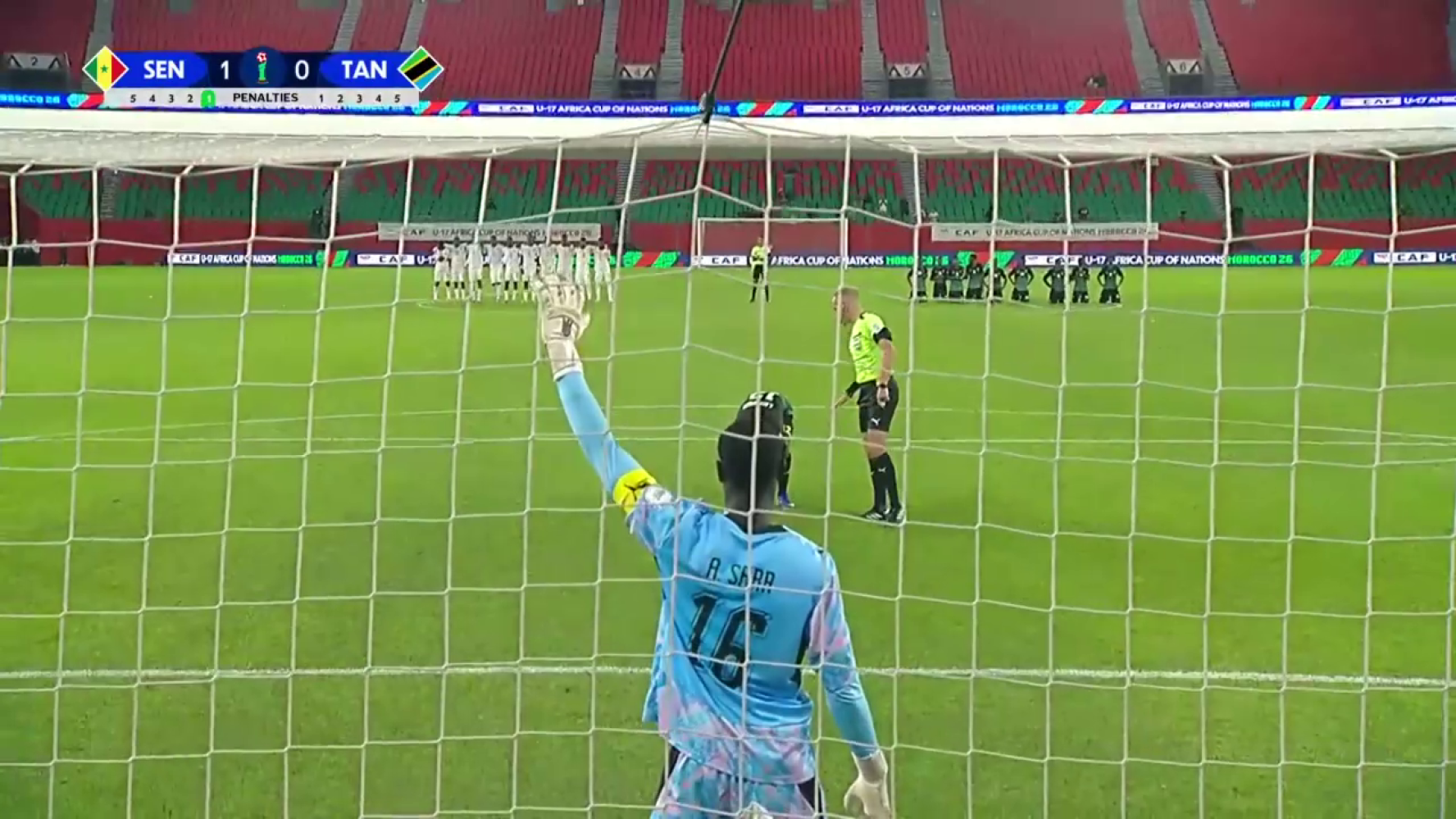
Senegal are the 2026 U-17 Africa Cup of Nations champions after defeating Tanzania 4–2 on penalties following a 1–1 draw in the final in Rabat. It was Senegal’s third consecutive knockout victory via a penalty shootout, having also overcome Mali and Morocco from the spot. The final was characterized by frequent transitions, direct attacking play, and intense physical duels across the pitch. While the technical quality fluctuated, the match provided a valuable test of mentality, athleticism, and competitiveness, offering a useful indicator of which players may be closest to making the step up to senior football.
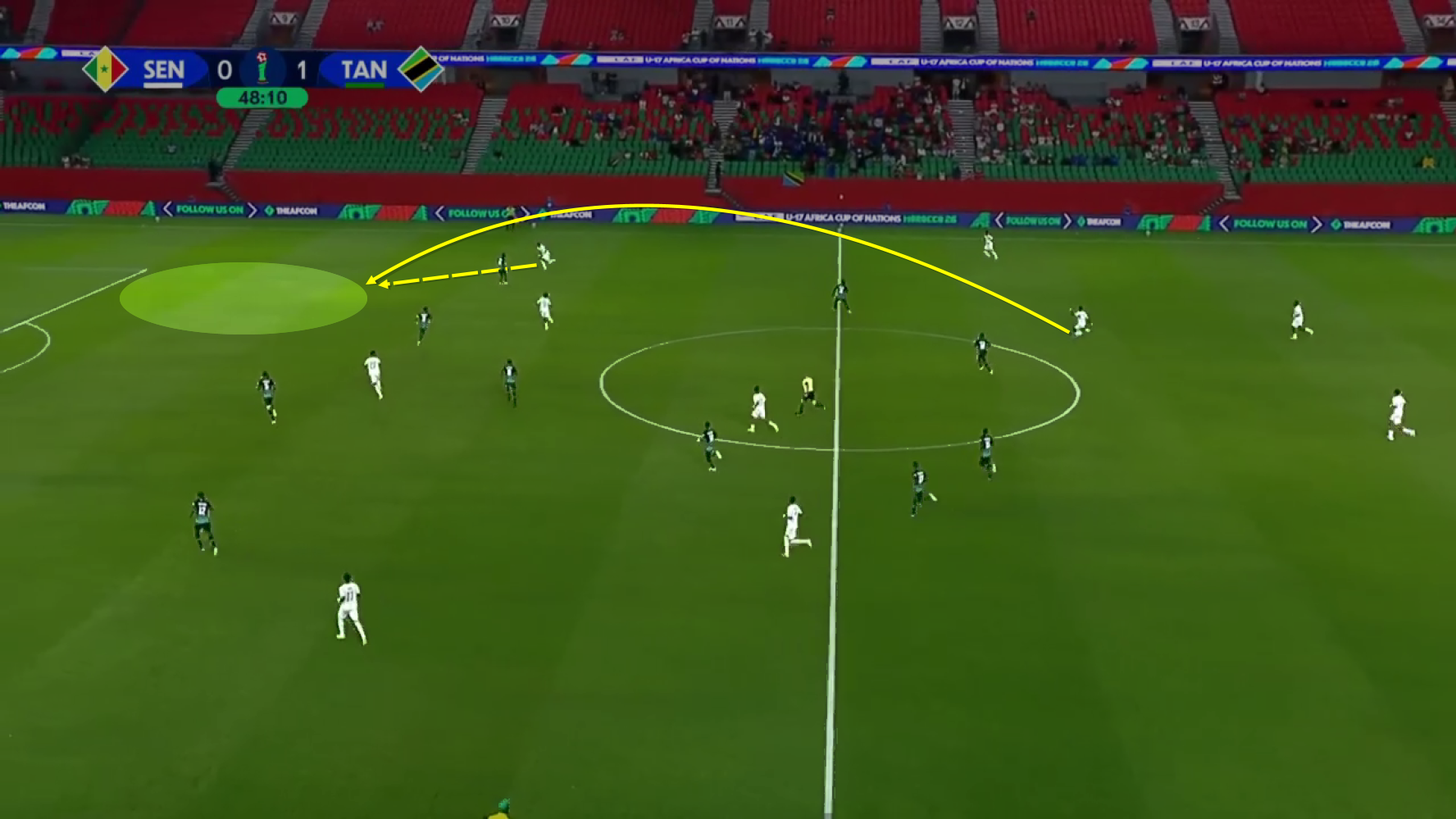
Senegal operated in a 1-4-3-3 under Issa Aïdara. A recurring pattern in possession was the exploitation of depth through Mbodji’s runs beyond the defensive line, with Sadio consistently finding him with well-weighted long passes. The direct connection between the two was one of Senegal’s most effective mechanisms for advancing play and attacking the opposition’s back space (see image below).
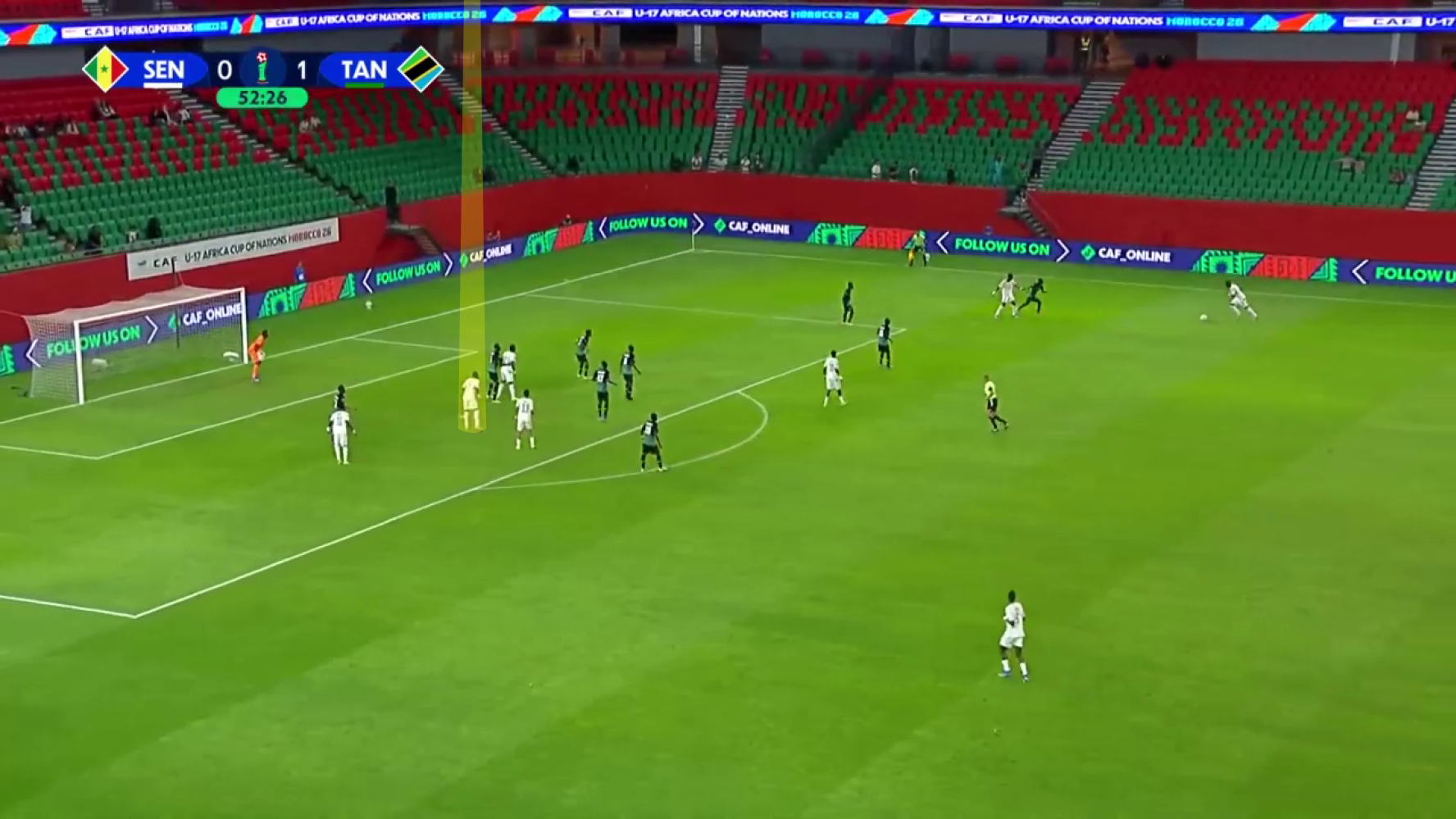
They also used deep crosses from the right side, with their right-back aiming deliveries into the space between the opposition full-back and centre-back (see image below).
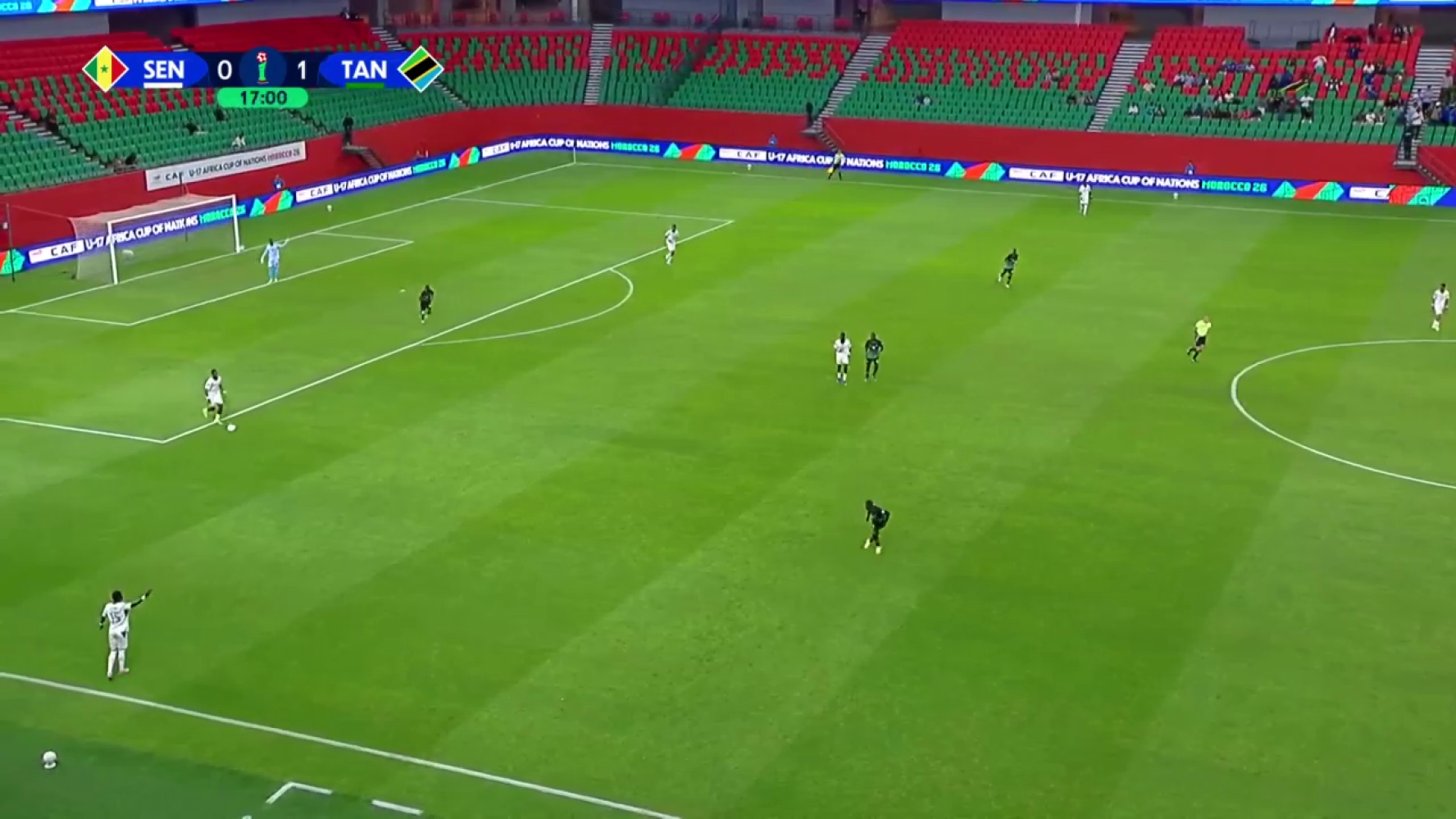
Senegal delivered long throw-ins from both flanks to increase pressure on the opposition, particularly in the second half. Out of possession, they pressed in a 1-4-4-2 shape, with striker Cheikh Sy and attacking midfielder Souleymane Faye screening passes into the opposition’s defensive midfielder, Issa Mussa Chole.
Their goal (64´) came from a wide free-kick, with Sega Mbodji flicking on an inswinging cross delivered by Souleymane Faye, before game-changer Ibrahima Dione scored a close-range tap-in after a rebound from the goalkeeper.
Tanzania, coached by Elieneza Nsanganzelu, played in a 1-4-3-3 in possession and often used long passes from goalkeeper Haji Abdalah towards the wingers to bypass Senegal’s press, looking either to attack the space in behind or to win second balls. They scored early in the game (7’) after a soft lay-off from striker Luqman Mbalasalu for the arriving Hamis Mihambo, who placed the ball into the far bottom corner.
During their press, Tanzania used one of their attacking midfielders, Dismas Athanasi, to pick up Senegal’s defensive midfielder Émile Sadio (see image below).
Here the players who stood out:
El Hadji Ibrahima Sow (Senegal /AS Dakar Sacré-Cœur), offensive midfielder born 2009.
Box-to-box midfielder with excellent running capacity, shown by his involvement in all phases of play throughout the tournament. He played precise through passes, demonstrating strong vision and passing technique. He also attacked the penalty spot with well-timed late runs, coming close to scoring with a first-half header. Defensively, he was strong in duels, showing good timing in his tackles, including slide tackles. He left the pitch on a stretcher after a fully committed performance.
El Hadji Ibrahima Sow would be a good short-term fit for a mid-table team in the Allsvenskan. In the longer term, he could develop into an interesting prospect for a top-three club in the Primeira Liga.
Ibrahima Dione (Senegal / ASC HLM Dakar), striker born 2009.
Tall striker, strong in aerial duels and in holding the ball with his back to goal. Ibrahima Dione had a decisive impact on the match, scoring the equaliser just two minutes after coming on as a substitute (64’), finishing from close range after a goalkeeper rebound. He also scored in the penalty shootout with a precise inside-foot finish into the top corner.
Ibrahima Dione would be a strong short-term prospect for a mid-to-top table team in the Eliteserien. In the longer term, he could develop into a player ready for a low-to-mid table club in the Ligue 1 within the next five years.
Idrisa Kasim Kilendemo (Tanzania), left-back born 2009.
Fast full-back, strong in playmaking and dribbling. He changed direction with the ball explosively to beat his direct opponent and supported the attack without the ball. He was well positioned to close down opponents quickly on their first touches when they received wide. However, he was not always composed in defensive 1v1 situations.
