

A game full of tension, structure, and sharp transitions. Two organized teams battling for control, where small details and key moments made the difference. High intensity, tactical discipline, and personalities stepping up under pressure.
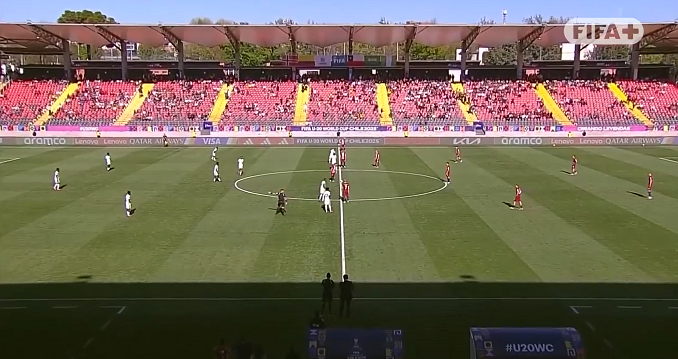
2025 FIFA U20 World Cup, Group F (Estadio Fiscal de Talca, Chile) — Norway vs Nigeria 1-0
Norway, led by national coach Bjørn Johansen, opted for a formation of 4-2-3-1.
They started the match in a well organized structure, showcasing clear defensive coordination from the opening minutes. The back-line operated high with strong collective timing, stepping together and maintaining compact distances between units.
The breakthrough came early. In the 9th minute, Norway took the lead from the penalty spot (1-0), converting calmly after awarding a decisive situation inside the box. That early advantage had a clear influence on the rhythm of the match and allowed Norway to manage phases with more tactical control.
Out of possession, Norway applied pressure mainly in the middle third. Their pressing structure focused on closing central lanes and forcing Nigeria into less dangerous zones. The double pivot played a key role in screening central spaces and supporting counter-pressing actions after losing the ball.
In possession, Norway looked to exploit the flanks. The offensive plan relied on speed in wide areas, using quick transitions and direct vertical passes to attack space. During the first half, several attempts were made through counter-attacks and long balls, but most were well handled by the Nigerian defensive line, who dealt effectively with aerial deliveries and second balls.
As the game progressed and Nigeria gained more areal control, Norway adjusted by dropping slightly deeper. They increased density in central areas, committing more players to protect the middle. This compactness disrupted Nigeria’s rhythm and prevented clean progression through central channels.
Despite their disciplined defensive structure, Norway struggled to create clear scoring opportunities from open play. Their transitions lacked precision in the final phase, and the attacking execution did not fully capitalize on recovery situations.
Overall, Norway demonstrated strong defensive organization, coordinated pressing mechanisms, and tactical discipline with the early penalty proving decisive.
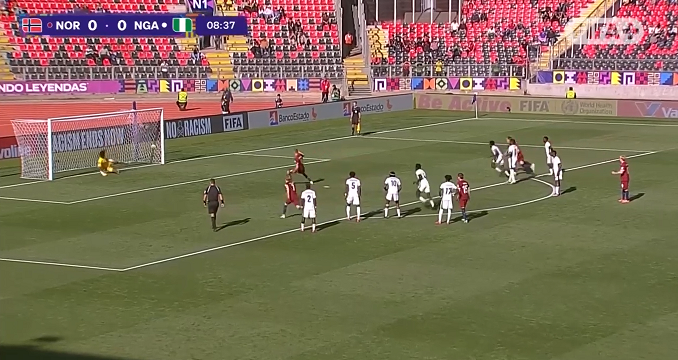
(Norway U20 team captain Rasmus Holten scores the decisive hit from the penalty spot — 1-0)
Nigeria, under the guidance of national coach Aliyu Zubairu, decided to start in 4-3-3 shape.
Nigeria began the match in a 4-3-3 structure, emphasizing athleticism, verticality, and vertical progression. Their midfield three aimed to balance physical presence with forward movement, while the front line looked to stretch Norway’s high defensive line.
Conceding early forced Nigeria to react. They remained composed, focusing on building structured attacks rather than rushing phases. Defensively, they managed Norway’s long balls and counter-attacks effectively, with the centre-backs showing good anticipation and physical dominance in aerial situations.
In the second half, Nigeria controlled possession for longer periods and began dictating the tempo. The tactical shift to a 4-4-2 added more direct presence in advanced zones and improved their ability to press Norway’s build-up.
However, due to Norway’s compact central block and high pressure in midfield, Nigeria was often forced wide. While they consistently reached the flanks, the final action, crosses, cut-backs, or decisive passes, lacked the necessary precision to convert dominance into goals.
Nigeria showed tactical flexibility, strong physical capacity, and resilience after going behind early. The performance reflected competitive maturity, but the absence of efficiency in the final third ultimately defined the result.
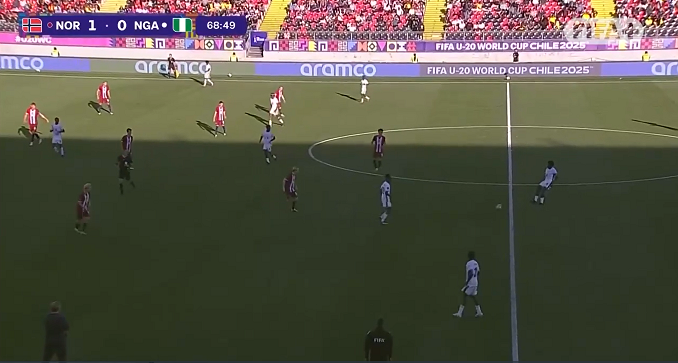
(The Nigerian U20 team in possession)
Player who stood out in this match:
Sondre Granaas (Norway U20 / Molde FK), central midfielder born 2006
Sondre Milian Granaas delivered a very complete midfield performance, particularly impressive in transition moments. His recovery after losing possession stood out reacting immediately, pressing with intensity, and often regaining control for his team. That defensive reaction speed adds real value in high-tempo matches.
In possession, he showcased good passing ability, circulating the ball with confidence, and selecting progressive options when space opened. His explosiveness over short distances allowed him to escape pressure, while his dribbling in tight areas helped Norway to maintain control in congested central zones.
Granaas demonstrated a balanced profile: energetic without the ball, composed and technical with it. A central midfielder capable of impacting both defensive transitions and build-up phases.
You can check our offers here and reach out to us via our ‘Contact us’ page for fixed or flexible packages. If you like it please SUBSCRIBE to the blog and you will receive all future articles and news.
